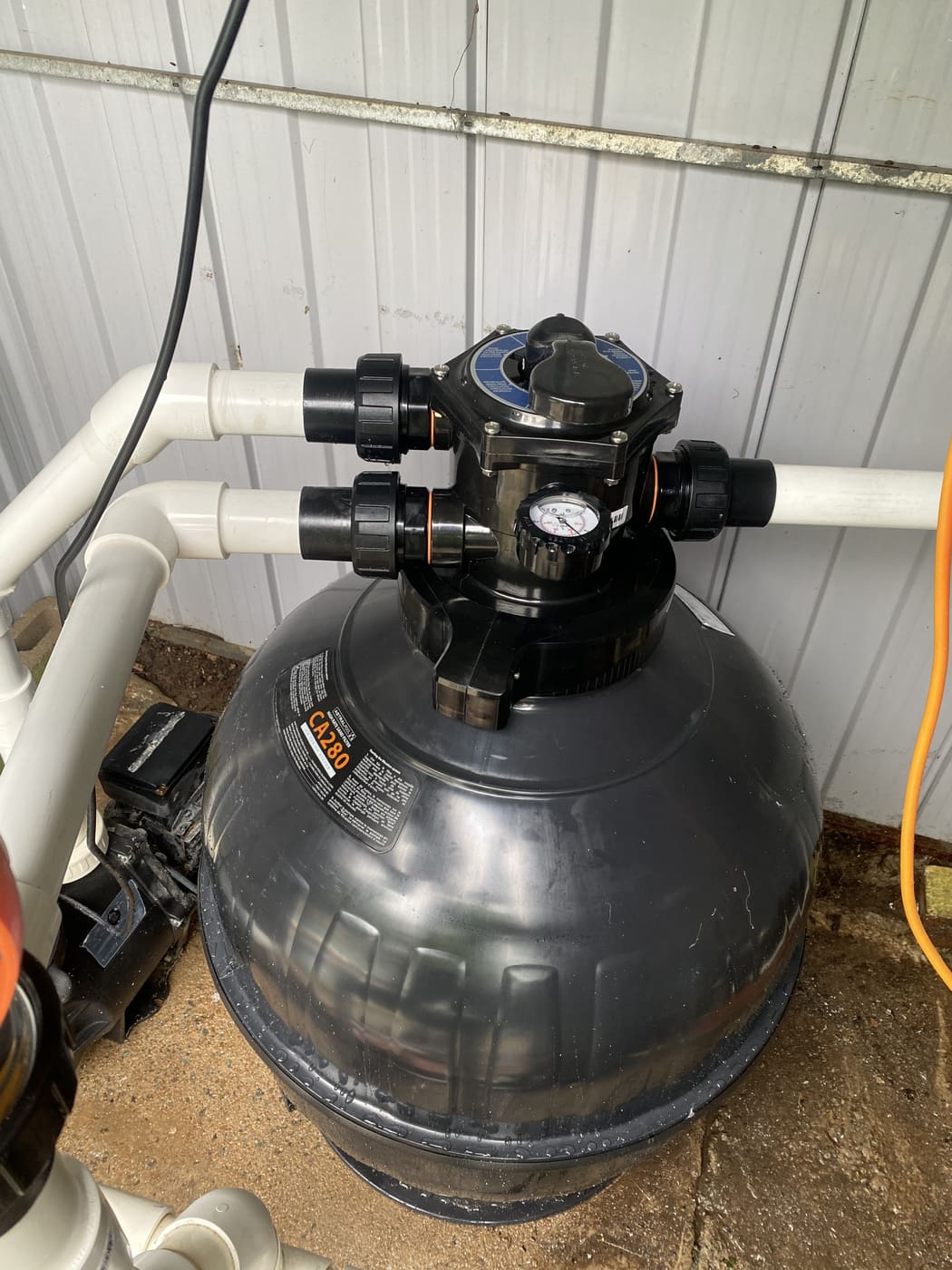
Chemicals kill what is in the water, but the filter is what takes it out. When a filter is clogged, water flow drops, chlorine is spread less evenly, and fine particles stay suspended. Cloudy water, a struggling pump and a pool that needs more chemicals than it used to are often filter problems.
Sand, glass and cartridge filters
Most Townsville pools run one of three types. Check the label on the tank or the model plate if you are not sure which you have.
- Sand filters push water through a bed of specially graded filter sand. They are cleaned by backwashing, which reverses the flow and flushes trapped dirt out the waste line.
- Glass media filters use the same tank and multiport valve as a sand filter, filled with crushed recycled glass instead of sand. They are cleaned the same way, by backwashing.
- Cartridge filters trap dirt in a pleated fabric element inside the housing. There is no backwash. The cartridge comes out and gets hosed down, and every so often it needs a soak in cartridge cleaner.
Reading the pressure gauge
The gauge on top of the filter is the best indicator you have. After a fresh clean, with the pump running, note the reading. That is your clean baseline. As the filter collects dirt, the pressure climbs.
A common rule of thumb is to clean the filter when the gauge reads about 8 to 10 psi (roughly 55 to 70 kPa) above that clean baseline. Most gauges show both units. Some manufacturers give their own figure in the manual, and that takes priority.
Other signs the filter is due:
- Weaker flow from the return jets.
- Hazy water when the chemistry tests fine.
- The pool needing more chlorine than usual to hold a reading.
- Sand or fine grit appearing on the pool floor near the returns, which points to a fault rather than a dirty filter.
If the gauge reads zero with the pump on, or the needle sits in the same place no matter what, the gauge itself may have failed. They are inexpensive to replace and worth having working.
How to backwash a sand or glass filter
- Turn the pump off. Never move the multiport valve handle while the pump is running, as it can damage the internal seal.
- Set the valve to Backwash. Make sure the waste line is open and directed somewhere suitable.
- Run the pump for two to three minutes, or until the water in the sight glass runs clear.
- Pump off, set the valve to Rinse, and run for 30 to 60 seconds. This resettles the media so dirty water doesn't go back into the pool.
- Pump off, set the valve back to Filter, then restart and note the new pressure as your clean baseline.
- Top up the pool if the water level has dropped below the middle of the skimmer opening.
Backwashing removes water and some chemicals, so test and rebalance afterwards. Don't backwash more than the pressure calls for, since a slightly dirty sand bed actually filters finer particles than a freshly cleaned one.
How to clean a cartridge filter
- Turn the pump off at the power point and close any isolation valves.
- Release the pressure using the air bleed valve on the lid, then open the housing and lift out the cartridge.
- Hose between every pleat from top to bottom with a fan nozzle. Avoid a pressure washer, which can tear the fabric.
- Check the pleats for tears, flattened sections or a cracked end cap.
- Every few months, or when hosing no longer brings the pressure back down, soak the cartridge overnight in a cartridge cleaning solution and rinse thoroughly.
- Check the lid O-ring, refit the cartridge, close the housing, open the air bleed and restart the pump. Close the bleed when water comes out steadily.
Having a second cartridge to swap in means the pool keeps running while the dirty one soaks and dries.
Wet season loads and replacement intervals
From December to March, storms bring leaves, soil and flowering debris into Townsville pools almost every week. Filters that need cleaning once a month in winter may need it every week or two through the wet. Empty the skimmer and pump baskets first after a storm, as blocked baskets cut flow and make the gauge read low, which can hide a dirty filter.
Filter media doesn't last forever. These are rough ranges, and the right interval depends on bather load, debris and how well the water chemistry is kept:
| Filter type | How it's cleaned | Rough replacement interval |
|---|---|---|
| Cartridge | Hose down, plus a periodic chemical soak | Cartridge element every 1 to 3 years |
| Sand | Backwash and rinse | Sand every 5 to 7 years |
| Glass media | Backwash and rinse | Generally lasts longer than sand; check the manufacturer's guidance |
Signs your filter needs repairs, not cleaning
Some problems won't go away with a backwash or a hose-down:
- Sand on the pool floor. Usually a broken lateral inside the tank letting media through.
- Water running from the waste line in Filter mode. Often a worn multiport valve seal.
- Pressure that climbs again within days of a clean. Media that has caked or channelled, or a cartridge past its life.
- Leaks around the lid, clamp band or unions, or a cracked tank.
On every pool service visit the filter is cleaned or backwashed and the pressure is noted, so a slow climb gets caught early. The pump, filter, chlorinator cell and timer are also inspected, and minor issues are handled on the spot. A failed filter is diagnosed and quoted separately before any work is done, and replacement cartridges can be supplied at supplier cost. For a regular schedule that tracks filter pressure over time, see pool maintenance. If cloudy water is the reason you are checking the filter, our cloudy pool water guide covers the chemistry side.